
When decay, infection, or damage extends beyond what treatment can repair, removing the tooth may protect your comfort and oral health. Your dentist will consider options such as a filling, crown, or root canal before recommending extraction.
Extraction may be the best option when the tooth cannot be predictably restored, has a severe crack, or threatens surrounding teeth and tissues. A careful examination, dental X-rays, and an assessment of your overall health help determine whether removal offers a safer, more reliable outcome. The team at Gainesville Dentistry Co. walks patients through each of these options before recommending extraction as a last resort.
You will also need to understand what the procedure involves. It’s important to know how to support healing and which replacement options can restore your bite and appearance.
When Removal May Be Recommended
Dentists usually recommend removal when a tooth cannot be repaired predictably, no longer has adequate support, or creates a significant risk to nearby teeth and tissues. Your evaluation may include dental X-rays, gum measurements, tests of the tooth’s structure, and consideration of your overall health.
Severe Decay Beyond Restoration
A tooth may need removal when decay has destroyed too much enamel and dentin for a filling, crown, or other restoration to hold securely. Decay that extends below the gum line can also prevent a dentist from creating a clean, durable seal around the repair.
An infection may develop when bacteria reach the pulp, the soft tissue inside the tooth. A root canal and crown can sometimes preserve the tooth, but extraction may be recommended if the tooth lacks enough healthy structure, has repeated infections, or cannot support a stable crown.
Your dentist may discuss replacing the tooth with an implant, bridge, or partial denture.
Advanced Gum Disease
Advanced periodontal disease can damage the bone and ligaments that hold your tooth in place. As support decreases, the tooth may become loose, painful when chewing, or difficult to clean effectively.
Your dentist may first consider deep cleaning, gum treatment, medication, or periodontal surgery. Removal becomes more likely when severe bone loss makes the tooth unlikely to remain stable, or when ongoing infection threatens neighboring teeth.
Treating the gum disease remains important after extraction because the condition can affect the surrounding tissues and any future replacement.
Cracked Or Fractured Roots
A crack that extends into the root often allows bacteria to enter areas that routine cleaning cannot reach. You may notice pain when biting, sensitivity when releasing a bite, swelling, or recurring gum infections, although some cracks cause few obvious symptoms.
A crack limited to the crown may sometimes be treated with a filling or crown. A vertical root fracture, however, generally cannot be repaired predictably.
For a single-rooted tooth, your dentist may sometimes remove only the affected root and preserve the rest of the tooth. If the fracture affects multiple roots or the tooth has poor support, complete extraction may provide the safer option.
Impacted Or Problematic Wisdom Teeth
Wisdom teeth may remain trapped beneath the gum or grow at an angle because your jaw lacks sufficient space. An impacted tooth can cause repeated gum infections, decay in the wisdom tooth or adjacent molar, cyst formation, or damage to nearby roots.
Removal may be recommended when you experience pain, swelling, difficulty opening your mouth, or recurring infection. Your dentist or oral surgeon will review X-rays to assess the tooth’s position and its relationship to nerves, sinuses, and neighboring teeth.
Not every impacted wisdom tooth requires extraction; a symptom-free tooth may be monitored when examination shows a low risk of future problems.
How Dentists Evaluate Treatment Options
Your dentist weighs the tooth’s condition, available restorative procedures, and expected long-term performance before recommending extraction or preservation. The evaluation also considers infection control, bone support, your overall health, and how each option affects chewing and future treatment.
Diagnostic Imaging And Clinical Examination
Your dentist examines the tooth for decay, cracks, looseness, swelling, drainage, tenderness, and changes in gum depth. X-rays show the roots, surrounding bone, decay beneath fillings, and infection around the root tip.
In complex cases, a 3D CBCT scan may reveal fracture patterns, bone defects, or anatomy that standard images cannot show. The dentist also checks whether enough healthy tooth structure remains to support a filling, crown, or other restoration.
A tooth with severe mobility, extensive bone loss, a vertical root fracture, or decay extending below the gumline may have a poor chance of lasting. Your bite and the condition of neighboring teeth also influence the decision.
Restorative Alternatives
If the tooth remains structurally sound enough, treatment may include a filling, crown, root canal, periodontal therapy, or a combination of procedures. A root canal can remove infected pulp, while a crown protects the remaining tooth from biting forces.
Your dentist may also recommend gum treatment or minor surgery when those measures can improve access and stability. Restoration cannot reliably overcome every type of damage.
A vertical root fracture, inadequate remaining tooth structure, uncontrolled decay, or severe supporting-bone loss may prevent a durable repair. Your dentist should explain the expected benefits, risks, number of visits, cost, and possible need for retreatment before you choose.
Long-Term Prognosis And Oral Health Impact
Your dentist estimates how well each option is likely to function over time, not simply whether treatment can be completed. The assessment includes bone support, tooth mobility, crown-to-root ratio, crack location, gum health, bite forces, oral hygiene, smoking, diabetes control, and your ability to maintain follow-up care.
Extraction may remove the immediate source of disease, yet the resulting space can affect chewing and allow neighboring teeth to shift. If removal becomes necessary, discuss timely replacement with an implant, bridge, or partial denture when appropriate.
What To Expect During And After the Procedure
You receive local anesthetic or, when appropriate, sedation before the dentist removes the tooth. Afterward, a blood clot protects the socket while your gum and bone heal, so your actions during the first few days matter.
Anesthesia And Extraction Methods
Your dentist reviews your medical history, medications, allergies, and any X-rays before starting. Local anesthesia numbs the tooth and surrounding gum, so you may feel pressure or movement but should not feel sharp pain.
Sedation can help you remain relaxed, while general anesthesia is reserved for selected cases. A simple extraction removes a visible tooth with specialized instruments.
For an impacted, broken, or difficult tooth, your dentist may make a small gum incision, remove a limited amount of bone, or divide the tooth into sections. You may receive dissolving stitches.
The procedure commonly takes less than an hour, although complex cases can take longer.
Recovery Timeline And Aftercare
Keep firm pressure on the gauze for the time your dentist recommends, usually 30–60 minutes. For the first 24 hours, avoid vigorous rinsing, spitting, smoking, alcohol, straws, and strenuous exercise because these actions can dislodge the clot.
Use an ice pack against your cheek for short intervals and take pain medicine exactly as directed. Eat soft, cool foods such as yogurt, eggs, or mashed potatoes, and chew away from the socket.
After 24 hours, gently rinse with warm salt water if your dentist approves, brush carefully around the area, and continue prescribed medicines. Pain and swelling often increase during the first two or three days, then improve.
Gum healing usually takes one to two weeks, while bone remodeling takes longer.
Warning Signs That Need Prompt Attention
Contact your dentist promptly if bleeding remains heavy after repeated pressure, swelling worsens after the third day, or you develop fever, pus, foul taste, or increasing redness. These signs can indicate infection or another complication.
Severe pain that begins or intensifies two to five days after extraction may signal dry socket, especially if pain spreads toward your ear or temple. Your dentist can clean and dress the socket.
Seek urgent medical care for trouble breathing or swallowing, rapidly spreading facial swelling, uncontrolled bleeding, or signs of a serious allergic reaction.
Replacing a Missing Tooth
Replacing an extracted tooth can help you chew comfortably, maintain tooth alignment, and support normal appearance. Your dentist will consider the tooth’s location, jawbone health, gum condition, medical history, budget, and treatment timeline before recommending an option.
Dental Implants
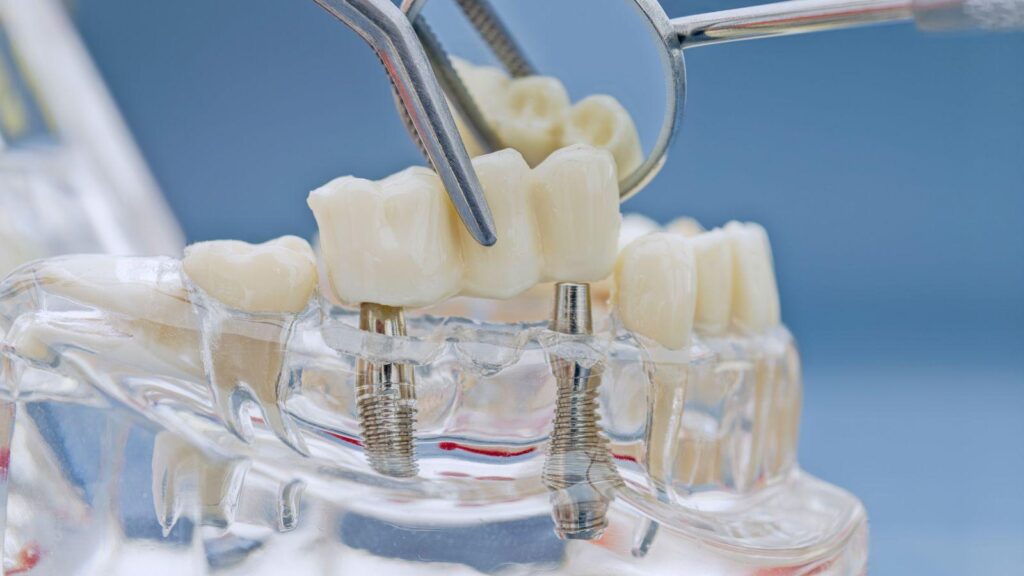
A dental implant replaces the tooth root with a titanium or compatible implant placed in your jawbone. After healing, your dentist attaches an abutment and custom crown.
The result functions much like a natural tooth and does not require reducing neighboring teeth. You need sufficient bone and healthy gums for predictable placement.
If extraction caused bone loss, you may need bone grafting before or during implant treatment. Healing and integration can take several months, and smoking, uncontrolled diabetes, poor oral hygiene, or certain medications may affect treatment.
Implants require daily brushing, flossing, and professional cleanings. They usually cost more initially than bridges or removable dentures, but they can provide a durable, fixed replacement when you meet the health requirements.
Fixed Bridges
A fixed bridge fills the gap with an artificial tooth held by crowns on adjacent teeth. It provides a nonremovable replacement and usually requires less treatment time than an implant.
You can often restore chewing function after the supporting teeth heal and your dentist completes the bridge. Your dentist must reshape the neighboring teeth to support the crowns.
Those teeth need adequate strength and healthy roots; a bridge may not suit teeth with extensive decay, cracks, or advanced gum disease. Food can collect beneath the replacement tooth, so you must clean under it with a floss threader, interdental brush, or water flosser.
A bridge may last many years with proper care, but its lifespan depends on hygiene, bite forces, and the condition of the supporting teeth.
Removable Partial Dentures
A removable partial denture replaces one or more missing teeth with artificial teeth attached to a gum-colored base. Clasps or precision attachments help hold it in place.
This option generally costs less than implants and can restore appearance and some chewing function without permanently altering neighboring teeth. You remove the denture for cleaning and usually take it out while sleeping, unless your dentist gives different instructions.
Clean your natural teeth, gums, and the appliance daily. Avoid using hot water that could distort the denture.
The appliance may feel bulky at first and can move during chewing or speaking. Your dentist may need to adjust it as your mouth changes.
Replacing a tooth soon after extraction may require a new fit if the gum and bone continue to shrink.