
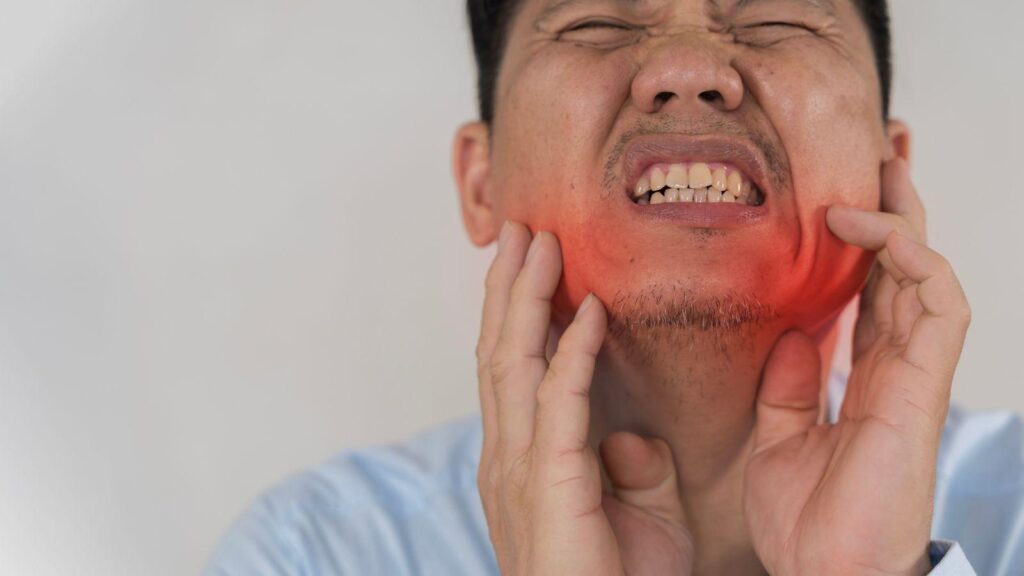
Jaw pain, clicking, stiffness, headaches, and difficulty opening your mouth can point to a temporomandibular joint disorder, commonly called TMD. These conditions affect the jaw joints and nearby muscles, and symptoms may result from clenching, arthritis, injury, or other factors.
Understanding how the joint works, what increases your risk, and how clinicians diagnose TMD can help you choose appropriate care. The team at Laurel Dentist can evaluate these symptoms and discuss which conservative treatment options may help before surgery is ever considered.
Learn which symptoms warrant medical attention and why surgery usually remains a last resort.
Understanding the Temporomandibular Joint
Your temporomandibular joints connect your lower jaw to your skull, one on each side of your face. These joints work with nearby muscles, ligaments, cartilage, and nerves to help you chew, speak, swallow, and open your mouth.
Types Of TMJ Disorders
TMJ disorders, also called temporomandibular disorders (TMD), affect the jaw joints, the muscles that control movement, or both. Common types include:
- Muscle-related TMD: Tightness, inflammation, or overuse affects the chewing muscles. Jaw clenching, teeth grinding, stress, and prolonged chewing can contribute.
- Joint-related TMD: Inflammation, arthritis, injury, or changes inside the joint can cause pain and restricted movement.
- Disc displacement: A small cartilage disc may move out of its usual position. This can produce clicking, catching, or locking when you open or close your mouth.
- Degenerative joint disease: Osteoarthritis or other joint changes can damage cartilage and alter jaw movement.
You may have more than one type at the same time. A dentist or physician can assess your symptoms, jaw movement, bite, and medical history to identify likely causes.
Common Signs And Symptoms
TMD symptoms can affect your jaw, face, ears, head, neck, and teeth. You may notice:
- Pain or tenderness near one or both jaw joints
- Difficulty opening your mouth fully
- Jaw stiffness, catching, or locking
- Pain while chewing, speaking, or yawning
- Clicking, popping, or grating sounds
- Headaches or facial pain
- Earache, pressure, or ringing without an ear infection
- Tooth sensitivity or pain without clear dental decay
Joint sounds without pain or limited movement often do not require treatment. Seek professional evaluation if pain persists, your jaw repeatedly locks, you cannot eat comfortably, or symptoms interfere with daily activities.
Sudden inability to open or close your mouth requires prompt medical or dental care.
Causes And Risk Factors
TMJ disorders can develop after jaw trauma, changes in the joint’s structure, repeated muscle tension, or medical conditions that affect cartilage and inflammation. Your chewing habits, stress level, bite, and history of arthritis can also influence your risk and symptom severity.
Jaw Injury And Structural Problems
A blow to the jaw, face, or head can injure the temporomandibular joint, surrounding muscles, or the cartilage-like disc that helps the joint move smoothly. Whiplash and dental procedures that require prolonged mouth opening may also strain the joint.
Structural problems can change how your jaw moves. These include disc displacement, joint degeneration, uneven tooth contact, or altered jaw anatomy.
Imaging findings do not always explain pain, and joint clicking without pain or limited movement often does not require treatment. If you develop persistent pain, swelling, limited opening, or a change in your bite after an injury, arrange an evaluation.
Avoid forcing your jaw open until a clinician identifies the cause.
Teeth Grinding And Muscle Tension
Bruxism, or repeated teeth grinding and clenching, increases pressure on the jaw joints and chewing muscles. You may do it while awake or during sleep, sometimes without noticing.
Stress, concentration, some sleep problems, and certain medications can contribute, but bruxism does not explain every case of TMJ pain. Other repetitive habits can maintain muscle tension.
Frequent gum chewing, nail biting, chewing ice, or resting your chin on your hand may aggravate symptoms, especially when you already have jaw tenderness or fatigue. You can reduce strain by choosing softer foods temporarily, taking smaller bites, limiting gum, and keeping your teeth slightly apart when you are not eating.
A dentist can check for tooth wear and discuss a properly fitted night guard when appropriate.
Arthritis And Other Health Conditions
Osteoarthritis can gradually wear down joint surfaces, while rheumatoid arthritis and other inflammatory disorders can affect the joint lining and surrounding tissues. These conditions may cause pain, stiffness, swelling, and reduced jaw movement, particularly after inactivity.
Fibromyalgia and other chronic pain conditions may increase sensitivity to jaw discomfort without directly damaging the joint. A history of frequent headaches, neck pain, or widespread muscle pain can also complicate symptom patterns.
Your risk may increase when several factors occur together, such as an injury combined with clenching or arthritis combined with muscle tension. Tell your clinician about joint disease, chronic pain, sleep problems, medications, and recent dental or facial trauma so they can assess contributing factors.
Diagnosis And Treatment Approaches
A clinician assesses your jaw movement, pain pattern, muscles, teeth, and bite before recommending treatment. Most care begins with reversible measures, while imaging, medication, injections, or surgery may suit specific findings.
Clinical Evaluation And Imaging
Your evaluation usually includes questions about jaw pain, clicking or locking, headaches, tooth grinding, injuries, stress, and difficulty chewing. The clinician measures how far you can open your mouth, checks whether movement is limited or uneven, and gently examines the jaw joints and chewing muscles for tenderness.
A dental or medical examination can also identify worn teeth, tooth problems, arthritis, infection, or other conditions that may resemble TMD. Panoramic dental X-rays can show teeth and major bone changes.
MRI can assess the disc and soft tissues, while CT can provide detailed views of the jawbone when substantial structural disease or trauma is suspected.
Conservative Self-Care Measures
You can reduce strain by eating softer foods temporarily, cutting food into small pieces, and avoiding gum, chewy foods, wide yawning, and biting hard objects. Keep your teeth slightly apart when you are not eating, and use your tongue and jaw muscles without clenching.
Warm compresses may relax tight muscles; cold packs can help after a painful flare. Use either for short periods with a cloth barrier.
Your clinician may recommend an appropriate pain reliever or anti-inflammatory, but follow the label and ask about risks if you have ulcers, kidney disease, take blood thinners, or have other medical conditions. Stress-management techniques and habit awareness can help reduce daytime clenching.
Avoid permanently changing your bite or using rigid dental devices without professional guidance.
Professional Therapies And Procedures
A dentist, physician, or physical therapist may recommend jaw exercises, posture training, manual therapy, and techniques that improve controlled opening. A clinician might prescribe short-term medication, such as an anti-inflammatory or muscle relaxant, when symptoms warrant it.
Medication choice depends on your health history and other drugs. An oral appliance may protect teeth or reduce muscle loading in selected cases.
It should fit properly and receive follow-up because poorly designed or unnecessarily long-term devices can alter your bite or worsen symptoms. Injections or surgery generally require a specific diagnosis and specialist assessment.
Procedures such as arthrocentesis, arthroscopy, or open-joint surgery may be considered for persistent joint problems, severe structural damage, or locking that does not respond to conservative care.
When To Seek Professional Care
You should arrange an evaluation when jaw pain, restricted movement, or chewing problems persist, recur, or interfere with daily activities. Seek urgent medical or dental care for sudden severe symptoms, a locked jaw, major swelling, or signs of infection.
Persistent Or Worsening Symptoms
Contact a dentist or healthcare professional if jaw pain or tenderness lasts more than a few days, keeps returning, or gradually worsens. Arrange an assessment if clicking or popping occurs with pain, your bite changes, or you develop headaches, ear-area discomfort, facial pain, or difficulty chewing.
Seek care if self-care measures—such as eating soft foods, avoiding gum and wide jaw movements, applying a warm or cold pack, or using an appropriate over-the-counter pain reliever—do not improve your symptoms. A professional can examine your jaw movement, teeth, bite, and surrounding muscles, then determine whether TMD or another condition may explain your symptoms.
Do not rely on imaging or a dental appliance without an evaluation. Treatment should match the suspected cause and may include physical therapy, medication, behavioral strategies, or other conservative options.
Urgent Warning Signs
Seek prompt medical or dental attention if you cannot open or close your mouth completely or your jaw suddenly locks. Severe pain after an injury can also indicate a significant joint or muscle problem that requires timely assessment.
Get urgent care for rapidly increasing facial or jaw swelling. Fever, redness, drainage, or difficulty swallowing or breathing may indicate an infection or another condition that needs immediate treatment.
Seek emergency care for jaw discomfort accompanied by chest pressure, shortness of breath, sweating, nausea, faintness, or pain spreading to your arm, back, neck, or shoulder. Heart problems can sometimes cause discomfort in the jaw, even without obvious chest pain.