
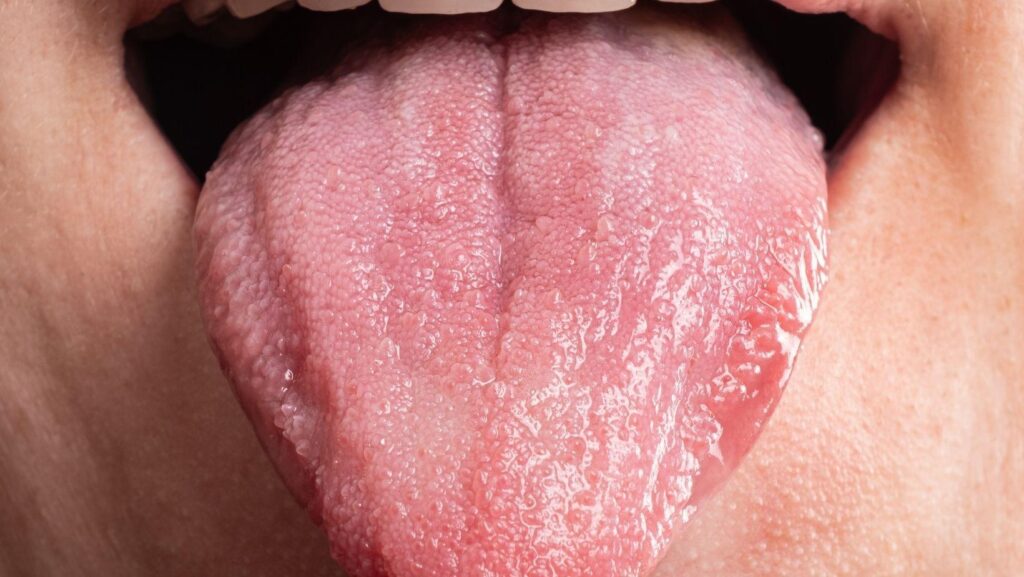
Your tongue’s color and texture can change for harmless reasons, such as food, dehydration, or oral hygiene. They can also point to problems such as irritation, infection, or nutrient deficiency.
Learn what a healthy tongue typically looks like, what common color and texture changes may mean, and which signs require professional care. If something unusual persists, the team at Old North Dentures and Implants can take a closer look and advise whether further evaluation is needed.
Normal Tongue Appearance
Your tongue will usually look pink to pinkish-red, feel slightly rough, and have small raised papillae across its surface. A thin, pale coating can be normal, especially after sleeping.
Persistent or pronounced changes deserve attention.
Healthy Color Variations
A normal tongue can range from light pink to a deeper pink or mild reddish tone. Color varies with natural pigmentation, age, hydration, diet, and oral hygiene.
The color should generally appear fairly even rather than showing a sudden, widespread change.
You may notice a thin white coating formed by bacteria, shed cells, saliva, and food residue. This coating often becomes less noticeable after drinking water, brushing, or gently cleaning your tongue.
Foods, drinks, and dyes can temporarily stain the surface red, purple, orange, or yellow.
A bright-red, unusually pale, yellow, blue, or darkened tongue may have several possible causes. If an unexplained color change persists, worsens, or occurs with pain, swelling, fever, sores, or difficulty swallowing, arrange an evaluation with a dentist or doctor.
Typical Surface Texture
A healthy tongue has many small bumps called papillae. Some contain taste buds, while others help the tongue move food and provide grip.
These bumps can make your tongue feel textured rather than smooth. The sides and tip may appear slightly more prominent because they experience frequent contact with teeth and food.
A small amount of coating between the papillae is common, particularly toward the back of the tongue, where cleaning is more difficult.
Texture changes can occur without indicating a serious problem. However, smooth, glossy areas, deep grooves, persistent thick patches, hard lumps, or sores that do not heal should receive professional assessment.
Avoid scraping forcefully, which can irritate the tissue and cause bleeding.
Common Temporary Changes
Your tongue may look different for a short time after eating strongly colored foods such as berries, beets, or foods containing artificial dyes. Coffee, tea, tobacco, and some medications can also affect its color or coating.
Dry mouth can make the coating appear thicker and increase unpleasant breath. Mouth breathing, dehydration, illness, and reduced saliva may contribute.
Drinking water and maintaining regular brushing and gentle tongue cleaning often help restore the usual appearance.
Minor irritation can follow a burn from hot food, accidental biting, or contact with sharp tooth edges. The area should gradually improve as it heals.
Seek dental or medical advice if pain, discoloration, swelling, or a surface change lasts more than two weeks.
Color Changes and Possible Causes
Your tongue’s color can change because of food, tobacco, medications, dehydration, oral hygiene, infection, or medical conditions. Color alone cannot confirm a diagnosis, so pay attention to how long the change lasts and whether you also have pain, sores, fever, bleeding, or difficulty swallowing.
White Coating or Patches
A thin white coating often develops when bacteria, food debris, and dead cells collect on the tongue. Dry mouth, dehydration, smoking, and poor oral hygiene can make it more noticeable.
Gently brushing your tongue, drinking water, and cleaning dental appliances may help.
Thick, creamy white patches that do not wipe away can result from oral thrush, especially after antibiotics, inhaled corticosteroids, or with diabetes or a weakened immune system. Wipeable patches may leave a red or tender surface.
Persistent, firm white patches can have other causes and require examination by a dentist or clinician.
Seek evaluation if a white area lasts longer than two weeks, repeatedly returns, bleeds, feels painful, or does not improve with gentle cleaning. Do not scrape forcefully, which can injure the tongue.
Red, Strawberry, or Bright Pink Areas
A red or unusually smooth tongue may occur with irritation from hot foods, sharp teeth, dentures, alcohol-based mouthwash, or tobacco. A smooth, sore tongue can also occur with iron, vitamin B12, or folate deficiency, although testing is needed to identify a deficiency.
A bright red, swollen tongue with prominent taste buds—often called a strawberry tongue—can accompany scarlet fever or Kawasaki disease, particularly when fever, rash, sore throat, or swollen glands also occur.
Geographic tongue produces smooth red patches with pale borders that shift location; it is usually harmless but may react to spicy or acidic foods.
Contact a clinician for sudden or persistent redness, significant pain, swelling, fever, or trouble breathing or swallowing. Do not start supplements without medical advice.
Yellow, Brown, Blue, or Black Discoloration
Yellow or brown discoloration commonly reflects surface buildup from tobacco, coffee, tea, certain foods, dehydration, or inadequate tongue cleaning. Some medicines and dry mouth can also contribute.
A “hairy” appearance may develop when elongated surface projections trap pigment and debris; gentle brushing and addressing the cause often help.
Blue or purple coloring can result from staining, bruising, or reduced oxygen and circulation. Sudden blue or purple discoloration with breathing difficulty, chest pain, confusion, or gray lips requires emergency care.
Black discoloration may reflect staining, bismuth-containing medicines, tobacco, or a harmless temporary overgrowth of tongue projections. Arrange a dental or medical assessment if the color change persists, spreads, becomes painful, or appears as a distinct irregular spot.
Texture Changes and Associated Conditions
Tongue texture changes often result from normal variation, irritation, infection, inflammation, or nutritional problems. Pay attention to whether a change causes pain, spreads, persists, or appears with fever, difficulty swallowing, or other symptoms.
Cracks, Grooves, and Fissures
Fissured tongue produces deep grooves on the top surface, sometimes forming a central crack with smaller lines branching outward. This common, usually harmless variation may become uncomfortable when food or bacteria collect in the grooves.
Gently brush your tongue and rinse after meals to keep the area clean. Avoid digging into the fissures with sharp objects.
Dry mouth, irritation, or inflammation can make the grooves feel sore. Fissures that develop suddenly, bleed, become very painful, or appear with persistent swelling deserve dental or medical evaluation.
A clinician can also check for another condition if you have widespread mouth changes or difficulty eating.
Smooth or Bald-Looking Areas
A smooth, red patch may occur when the tiny surface projections called papillae disappear. Geographic tongue commonly causes changing, map-like patches with pale borders; it is benign, although spicy or acidic foods may cause burning.
The patches can move or change shape over days or weeks.
A persistently smooth tongue can also occur with iron, vitamin B12, or folate deficiency, certain inflammatory conditions, or chronic irritation. Contact a clinician if the change lasts, causes significant soreness, or occurs with fatigue, pale skin, numbness, weakness, or a restricted diet.
Do not take high-dose supplements without identifying the cause.
Bumps, Sores, and Swelling
Temporary bumps may follow biting, burns from hot food, sharp teeth, braces, or other irritation. Canker sores usually appear as painful ulcers with a pale center and red border; they often heal within one to two weeks.
Avoid tobacco, alcohol-based mouthwash, and foods that worsen the pain while the area heals.
A white coating that wipes away and leaves a red, tender surface may indicate oral thrush, especially after antibiotics, inhaled corticosteroids, or with diabetes or immune problems. Seek prompt dental or medical care for any lump, ulcer, or thickened patch that lasts more than two weeks, repeatedly bleeds, becomes firm, or causes trouble swallowing, speaking, or breathing.
When to Seek Medical or Dental Care
Most tongue changes result from minor irritation, dehydration, or temporary coating, but persistent or painful changes need assessment. Prompt care matters when you also have trouble swallowing, breathing, speaking, or controlling bleeding.
Changes That Persist Beyond Two Weeks
Arrange a dental or medical evaluation if a white, red, dark, or mixed-color patch lasts longer than two weeks, especially if it does not wipe away or improves only briefly.
Also seek care for a sore, lump, thickened area, unexplained bleeding, numbness, or pain that does not resolve.
A persistent change can result from irritation, infection, medication, nutritional deficiency, or another condition. Your dentist or clinician may examine your tongue, gums, teeth, and throat and may recommend testing or referral.
Do not try to scrape, burn, or chemically treat a spot yourself.
Urgent Warning Signs
Seek urgent medical care if tongue swelling develops suddenly or interferes with breathing or swallowing. This can occur with a serious allergic reaction or infection.
Call emergency services if you have breathing difficulty, throat tightness, rapidly worsening swelling, faintness, or blue-gray discoloration.
Contact a clinician promptly for heavy or persistent bleeding, severe pain with fever, pus, spreading redness, or inability to drink fluids. A tongue injury may need treatment if bleeding does not stop after you apply firm pressure with clean gauze for 10–15 minutes.
Daily Habits That Support Oral Health
Brush your teeth twice daily with fluoride toothpaste. Clean your tongue gently with a toothbrush or tongue scraper.
Avoid forceful scraping, which can irritate the surface and worsen tenderness or bleeding. Drink enough water.
Avoid tobacco and vaping. Limit frequent alcohol use.
Rinse after meals when brushing is not practical. Clean dentures or removable appliances as directed.
Do not use antibiotics, antifungal medicine, or strong antiseptic rinses without professional advice. Schedule regular dental examinations.
Mention any new tongue change during your visit.