
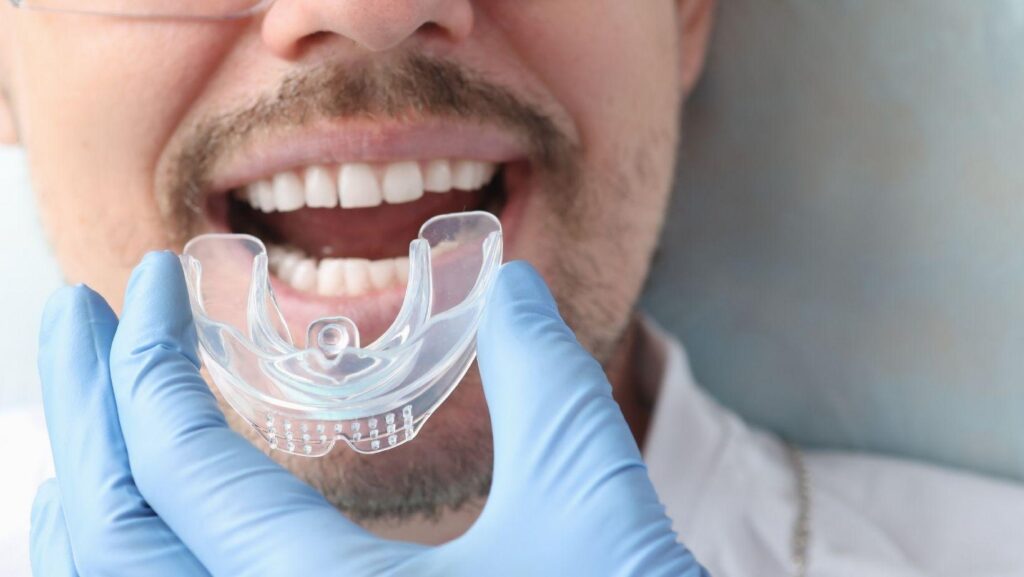
Whether you grind your teeth at night or play contact sports, the right oral appliance can help reduce preventable damage. A night guard protects against tooth grinding and clenching, while a sports mouthguard cushions your teeth and mouth during impact.
These devices serve different purposes, so choosing the correct type matters. The team at Smile Rejuvenation Powered by Santa Rosa Dental can help you determine which appliance fits your specific needs and get you properly fitted.
Learn how each appliance works, which option fits your needs, and how proper cleaning, storage, and replacement help maintain effective protection.
Understanding Protective Oral Appliances
Protective oral appliances serve different purposes: night guards limit damage from sleep-related grinding, while sports mouthguards reduce injury risk from impacts. Their materials, fit, coverage, and recommended use depend on the specific pressure or force they must manage.
Night Guards for Sleep-Related Grinding
A night guard fits over your teeth while you sleep to reduce direct tooth-to-tooth contact caused by grinding or clenching. It can help limit enamel wear, chipped teeth, sensitivity, and stress on dental restorations.
It may also reduce morning jaw soreness or headaches linked to muscle tension, although it does not treat every cause of those symptoms. You can find night guards in ready-made, boil-and-bite, and custom-fitted versions.
A dentist-made guard generally provides a more precise fit and can account for crowns, braces, missing teeth, or changes in your bite. Your dentist should evaluate persistent pain, damaged teeth, or a guard that feels uncomfortable.
Clean your guard after each use with cool water and a soft toothbrush. Avoid hot water, which can distort its shape, and replace the appliance when it becomes cracked, thin, or poorly fitting.
Mouthguards for Athletic Impact Protection
A sports mouthguard creates a barrier between your teeth and forces directed toward your mouth, jaw, or face. You should wear one during contact and collision sports, as well as activities such as cycling, skating, or recreational play where falls or impacts may occur.
It primarily protects the upper teeth and surrounding soft tissues. Sports mouthguards come in stock, boil-and-bite, and custom-fitted forms.
A properly fitted guard should stay in place while you talk or breathe without requiring constant clenching. Custom versions usually offer the most secure fit, while boil-and-bite models provide a practical alternative when fitted correctly.
Do not use a sports mouthguard as a substitute for a night guard. Its thicker impact-absorbing design may feel unsuitable for sleep, and it does not address the same forces created by grinding.
Key Differences in Design and Purpose
|
Feature |
Night guard |
Sports mouthguard |
|
Main purpose |
Limits grinding and clenching damage |
Reduces injury from external impact |
|
Typical use |
During sleep |
During sports or physical activities |
|
Design priority |
Stable fit and controlled tooth contact |
Cushioning and coverage |
|
Common material |
Firm or layered dental plastic |
Flexible, impact-absorbing plastic |
A night guard manages repeated pressure generated by your own jaw muscles. A sports mouthguard manages sudden forces from collisions, falls, or equipment.
Because these appliances address different risks, choosing one based only on appearance or availability may leave your teeth inadequately protected. Your dentist can recommend the appropriate type if you grind your teeth, play contact sports, wear braces, have dental restorations, or experience discomfort with an over-the-counter appliance.
Choosing the Right Device
Choose a device based on its purpose, fit, retention, and comfort. A night guard manages tooth contact from sleep-related grinding or clenching, while a sports mouthguard cushions the teeth and jaws during impact; neither device reliably replaces the other.
Custom-Fitted Options
A dentist makes a custom-fitted guard from impressions or a digital scan of your teeth. The device fits more precisely than retail models, stays in place with less effort, and can accommodate dental work, braces, uneven tooth surfaces, or a strong bite.
For nighttime grinding, your dentist can select an appropriate design and thickness after examining tooth wear, jaw symptoms, and your bite. A sports mouthguard can also receive a custom fit that improves speech, breathing, and retention during activity.
Custom devices usually cost more, but they may provide better durability and comfort. Ask your dentist how often you should replace yours, especially if you grind heavily, play contact sports, or notice cracks, thinning, looseness, or changes in your bite.
Boil-and-Bite Models
Boil-and-bite mouthguards use thermoplastic material that softens in hot water. You cool it briefly, place it over your teeth, and press it into shape according to the manufacturer’s instructions.
This process creates a closer fit than a stock guard but usually cannot match a professionally made device. These models generally suit sports protection when you need an accessible, lower-cost option.
Choose a guard designed specifically for sports rather than a thin nighttime grinding guard. Follow the fitting directions carefully.
Excessive heating, incorrect biting, or repeated remolding can weaken the material or create an unstable fit. Replace the guard if it becomes loose, develops tears, interferes with breathing, or no longer covers your teeth properly.
Stock Mouthguards
Stock mouthguards come preformed and require no fitting. They typically cost the least, but their fixed shape may feel bulky or fail to match your teeth.
You may need to keep your jaw closed to hold the guard in position, which can interfere with speaking and breathing. Use a stock model only when it fits securely and covers the intended teeth without causing pain or gagging.
It should not shift when you talk, breathe, or move your head. For organized or collision-based sports, a custom or properly fitted boil-and-bite guard usually offers better retention.
Do not use a stock sports mouthguard as a night guard unless your dentist specifically recommends it.
Materials and Comfort Considerations
Look for a guard made from durable, biocompatible material that contains no unnecessary irritants. Sports guards commonly use resilient thermoplastic layers to absorb and distribute impact.
Night guards may use harder acrylic or more flexible materials, depending on your bite, grinding pattern, and dental needs. Your guard should allow comfortable breathing, avoid sharp edges, and stay stable without excessive clenching.
If you have braces, ask your orthodontist before choosing a model because tooth movement can make a close fit change over time. Clean the device after each use with cool water and a soft toothbrush.
Avoid hot water unless the product instructions require it, since heat can distort the shape. Store the guard in a ventilated case and have your dentist check persistent soreness, jaw pain, tooth sensitivity, or fit problems.
Proper Use, Care, and Replacement
Clean your appliance after each use, let it dry fully, and store it in a ventilated case. Replace it when wear, damage, poor fit, or changes in your teeth reduce its protective function, and ask your dentist to check appliances that cause discomfort.
Cleaning and Storage Practices
Rinse your night guard or sports mouthguard with cool or lukewarm water immediately after removing it. Brush it gently with a soft toothbrush and mild liquid soap; avoid hot water, which can distort the material.
Do not use abrasive toothpaste, bleach, alcohol-based products, or household cleaners unless your dentist specifically recommends them. Allow the appliance to air-dry completely before storing it in a ventilated, rigid case.
Keep the case away from pets, children, direct sunlight, and high heat. Clean the case regularly and replace it if it becomes cracked or dirty.
Bring the appliance to appointments so your dentist can inspect it.
When to Replace Your Appliance
Replace your appliance if it develops cracks, holes, sharp edges, thinning, or a persistent odor that cleaning does not remove. A loose, warped, or uncomfortable guard may no longer protect your teeth properly.
Do not trim, reshape, or repair it yourself, because these changes can affect its fit and function. Sports mouthguards may need replacement as they wear or as your mouth changes.
Children and teenagers often need new appliances as their teeth and jaws develop, after orthodontic treatment, or when adult teeth erupt. Replace a night guard when grinding has worn through its biting surface or when your dentist identifies significant damage.
Dental Checkups and Fit Adjustments
Ask your dentist to evaluate the appliance during regular dental visits, especially if you notice jaw pain, tooth sensitivity, gum irritation, headaches, or changes in your bite.
A guard should fit securely without causing pressure, slipping, or difficulty breathing and speaking.
Your dentist can adjust or replace a custom appliance when dental work, orthodontic treatment, tooth movement, or gum changes alter its fit.
Stop using a guard that causes injury or significant discomfort until a dental professional assesses it.
For sports, choose a guard designed for your activity and follow your dentist’s fitting instructions rather than modifying it at home.