
A lower price does not automatically mean your dental implants use inferior materials. Cheaper implants may involve lower-grade or less rigorously tested components, but price alone cannot confirm quality; you should evaluate the manufacturer, materials, clinical planning, and provider’s experience. When comparing providers for affordable dental implants in Chula Vista, CA, it’s worth asking these questions directly rather than choosing based on price alone.
Treatment costs also vary for valid reasons, including imaging, bone grafting, the implant system, laboratory work, restoration type, and follow-up care. A detailed treatment plan can help you see what the quoted price includes and whether it leaves out services you may need.
How Implant Quality Is Determined
Implant quality depends on the materials, design, manufacturing controls, and evidence supporting safe clinical use. You should evaluate the complete system—not just the advertised price or the metal used in the implant fixture.
Implant Fixture Materials
The implant fixture is the post placed in your jawbone. Most use medical-grade titanium because it combines strength, corrosion resistance, and biocompatibility.
Titanium surfaces may receive treatments that improve bone attachment. Surface design alone does not guarantee successful integration.
Zirconia fixtures offer a metal-free alternative. They can provide good tissue compatibility and an acceptable appearance near the gumline, although they may have different strength and fracture considerations from titanium.
Your dentist should select the material based on your bone quality, bite forces, anatomy, allergies, and treatment goals. Ask which manufacturer produces the implant, which material grade it uses, and whether the product has clinical data.
A vague reference to “premium metal” does not provide enough information to judge quality.
Abutment And Crown Components
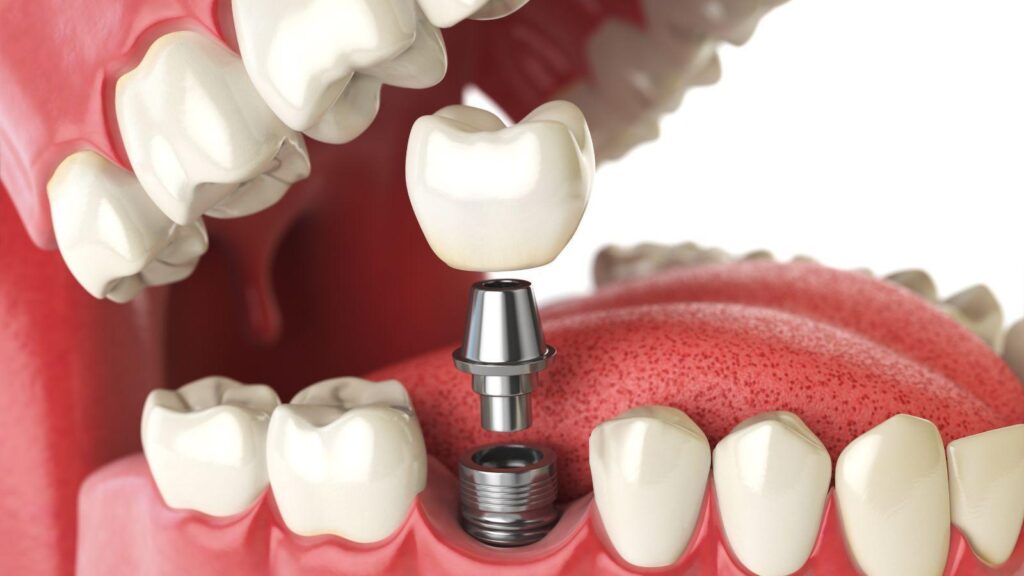
The abutment connects the fixture to the crown, while the crown forms the visible replacement tooth. These parts must fit the implant precisely.
Poorly matched or inaccurately manufactured components can contribute to loosened screws, movement, gum irritation, or uneven biting forces. Crowns may use materials such as porcelain fused to metal, lithium disilicate, or zirconia.
Your dentist should explain which option suits the tooth’s location, appearance requirements, and chewing demands. A back tooth may require high fracture resistance, while a front tooth may place greater emphasis on translucency and gum appearance.
Confirm whether the components come from the original implant manufacturer or an accurately compatible supplier. Replacement parts can become difficult to obtain when a clinic uses obscure or discontinued systems.
Manufacturing Standards And Regulatory Approval
Quality control affects every stage, including machining, surface treatment, sterilization, packaging, and traceability. Regulatory clearance or approval indicates that a product met applicable safety and performance requirements, but it does not guarantee that the implant will succeed in every patient.
Ask for the implant’s brand, model, and regulatory status. In the United States, you can verify relevant device information through the Food and Drug Administration’s databases.
Your provider should also maintain records that identify the exact system placed in your mouth. Clinical experience matters alongside regulatory status.
A qualified provider should use appropriate imaging, assess your medical history and bite, and follow the manufacturer’s placement instructions. These steps help reduce risks that material quality alone cannot prevent.
Why Treatment Prices Vary
Dental implant prices reflect more than the implant itself. Your total cost can change based on the condition of your mouth, the clinician’s experience, laboratory work, location, facility expenses, and the number or type of components required.
Clinical Complexity And Additional Procedures
A straightforward single-tooth implant may cost less than treatment involving bone loss, gum disease, or several missing teeth. Your dentist may need diagnostic imaging, tooth extraction, bone grafting, or a sinus lift before placing the implant.
Each procedure adds clinical time, materials, follow-up visits, and potential laboratory charges. The restoration also affects the price.
A custom abutment and crown may cost more than standardized components, while full-arch treatment requires multiple implants and a larger prosthesis. A low advertised price may exclude consultations, 3D imaging, temporary teeth, sedation, the abutment, or the final crown.
Ask for a written treatment plan that lists each included and excluded service.
Provider Experience And Laboratory Costs
Your provider’s training, experience, and use of diagnostic technology can influence the fee. Complex cases may require careful planning, surgical expertise, and coordination between a dentist, oral surgeon, periodontist, and restorative dentist.
These services increase the cost but may also help identify risks before surgery. Laboratory fees vary according to the materials, design process, and technician’s skill.
Digitally designed restorations, custom components, and high-quality ceramic or titanium parts generally require more specialized work than basic alternatives. Ask which implant system and restorative materials your provider plans to use, whether they meet applicable regulatory standards, and who will make your crown or prosthesis.
Geographic Location And Practice Overhead
Prices often differ between cities, regions, and countries because practices face different costs for rent, staff wages, insurance, equipment, sterilization, and regulatory compliance. A clinic with advanced imaging, an on-site laboratory, or dedicated surgical facilities may charge more than a practice with lower operating expenses.
Treatment abroad can have a lower quoted price, but travel, accommodation, follow-up visits, and managing complications at home can increase your total expense. Compare complete treatment plans rather than implant-only advertisements.
Confirm who will provide follow-up care, how the practice handles failed components, and whether replacement parts remain available in your area.
How To Evaluate A Lower-Priced Treatment Plan
A lower price can reflect efficient care, but it can also exclude important services or use unfamiliar components. Check the implant system, materials, clinical steps, provider credentials, and every charge before you agree to treatment.
Questions To Ask About Brands And Materials
Ask which implant manufacturer and model the dentist plans to use. Confirm that the system has appropriate regulatory clearance for your market, an established track record, and replacement parts that remain available if a component needs repair.
Ask whether the implant uses medical-grade titanium or zirconia, and request the exact material for the abutment and crown. The material alone does not determine quality, so also ask about manufacturing standards, laboratory quality controls, and the warranty terms.
Find out who will place the implant and who will restore it. Ask about the dentist’s training, experience with your type of case, expected success factors, and the imaging used for planning.
You should receive clear answers without pressure to decide immediately.
What A Written Estimate Should Include
Request an itemized estimate that separates the examination, 3D imaging, implant placement, abutment, crown, laboratory work, and follow-up visits. It should state whether the price covers anesthesia, temporary teeth, extractions, bone grafting, sinus lifts, and treatment for complications.
The estimate should identify the implant brand and restoration materials, describe the planned number of appointments, and explain what happens if the implant fails. Check whether taxes, medication, sedation, adjustments, and replacement components add to the advertised price.
Ask how long the quote remains valid and whether the clinic offers financing or staged payments. Insurance estimates may differ from the final benefit, so confirm coverage directly with your insurer.
Keep the written treatment plan and ask the clinic to document any changes before additional work begins.
Warning Signs To Consider
Be cautious when a clinic advertises a single unusually low price without explaining what it includes. A quote that covers only the implant fixture may exclude the crown, abutment, imaging, extraction, grafting, or follow-up care.
Treat vague answers about brands, materials, laboratory work, or provider qualifications as a reason to pause. You should also reconsider treatment if the clinic will not provide an itemized estimate, discourages a second opinion, guarantees success, or urges immediate payment.
Other concerns include missing diagnostic imaging, no discussion of gum health or bone volume, and unclear arrangements for emergencies or implant failure. A low price can remain reasonable when the plan is complete, the components are traceable, and the dentist explains the risks and alternatives clearly.
Balancing Cost, Safety, And Long-Term Value
A lower treatment fee does not automatically indicate inferior materials, but you should examine what the price includes. Diagnostic planning, implant components, surgical expertise, follow-up care, and maintenance can affect both safety and the total cost over time.
Importance Of Diagnostic Planning
Your dentist should assess your bone volume, gum health, bite, medical history, and available space before recommending an implant. Digital scans and three-dimensional imaging may reveal bone loss, infection, nerve locations, or sinus concerns that a basic examination could miss.
Ask whether the quoted price includes the consultation, imaging, extraction, bone grafting, temporary teeth, abutment, crown, and follow-up visits. A very low quote may exclude necessary procedures, making the final cost substantially higher.
You should also ask which implant system the provider plans to use and whether the components come from a reputable, traceable manufacturer. Brand name alone does not guarantee success, but clear documentation helps your dentist identify compatible replacement parts if you need repairs later.
Maintenance And Expected Longevity
Dental implants can function for many years, but their performance depends on placement, oral hygiene, general health, and regular professional care.
You should brush twice daily, clean around the implant with floss or an interdental brush, and attend dental examinations at the interval your dentist recommends.
Smoking, uncontrolled diabetes, gum disease, and teeth grinding can increase the risk of complications.
Treating gum inflammation and using a night guard when appropriate may help protect the implant and surrounding bone.
Ask about the provider’s policy for complications, replacement parts, and warranty coverage.
A lower-cost implant may remain a reasonable option when it uses documented materials, receives careful planning, and includes appropriate follow-up care.